Growth and Connection

Showing posts with label economy. Show all posts

Monday, November 2, 2009

A Sitopian World


Ever since the beginning of human civilization we have lived in what could be called a “sitopia,” (from the Greek sitos meaning food, and topos meaning place) a place where food is at the central aspect of society. It must be transported, bought, sold, cooked, and gotten rid of. As we move through the 21st century, food is often something we take for granted. We don’t think of where it comes from, what it took to get it to us, or even where it goes when we are done with it. Farmland that has been in use f0r hundreds of years for making food and animal feed is now being converted to grow energy crops for biofuel, and the amount of food being produced is being significantly reduced. But the reality is food is something we cannot afford to take for granted. Today 1.02 billion people do not have enough food to eat, more than the population of Canada, the United States and the European Union combined.


1


As we face the energy crisis and continue to search for methods to replace our dependence of fossil fuels, we need to be aware of the human and environmental impacts these actions make. The rush to switch from petroleum to bioenergy has the potential to lead to serious food shortages and a huge increase in prices. The production of crops for biofuels has been doubling every few years. Last year the United States used more than a third of their maize crops to harvest ethanol for biofuels. This is putting serious strain on world food supplies. World reserves of grain had already fallen from 100 days' supply in 2000 to 40 days in 2006, and can be expected to drop with promises to increase the percentage of biofuel in road fuels.


2


The depleting of food supplies results in a two-fold problem. One: there is not enough food being produced to feed the growing population. Two: Due to food shortages prices begin to rise, making food even less accessible. The United Nations World Food Programme has said that rapidly rising food prices are like “a silent tsunami threatening to plunge more than 100 million people on every continent into hunger."

3

In order to overcome this society must step back and re-evaluate the way we see our world. Food, one of the most basic and essential things needed in everyday life, is being used frivolously as an inventive, yet destructive attempt to solve our energy crisis. We must return to that “Sitopian” state in which food and urbanism are bound together, where cities are shaped with food being their central social core. Society must find a way to rediscover the value of food, as a means of survival, but also as a way of life. After all what good is having fuel to run a car, if there is no one to drive it.


4


Here is Architect Carolyn Steel’s take on food, energy and economy, and how it shapes our cities and lives:


Images Sources:
1:"Food": http://www.motherearthnews.com/Relish/Food-Safety-System.aspx

2:"Biofuels": http://wattsupwiththat.com/2007/10/09/

3:"Hunger": http://www.foodshortageusa.com/

4:"Earth": http://www.all-creatures.org/hope/img/earth-light.jpg


Sources:


-Sam Eby

Rapeseed: The Emblem of Subsistence


Call it an apocalypse or tree hugging: but something about expending fossil fuel seems off. Our depleting fuel supply will lead our society into a revelation, which will give our tree-huggers a chance to cross their arms and say “we told you so.” Then begins a quest for subsistent fuel and, accordingly, subsistent urbanity.

http://media-2.web.britannica.com/eb-media/41/91641-004-842864B7.jpg


A search for alternative fuels is, by its nature, a search for subsistent fuels; since, these are minimal fuels that can supplant the luxurious fossil fuel. Since fuel, or energy, is the driving backbone of production and economy, the notion of minimal fuel ultimately leads to the idea of minimal urbanity: hence, our invaluable

member of the urban survival kit.

The story of the corn fuel is a short lived one. It was revealed that it takes more energy to produce the fuel than how much energy that fuel can release. Also, many were uncomfortable with the fact that there are many who would rather eat the corn than to burn it.


http://i.treehugger.com/images/2007/10/24/rapeseed%20oil.jpg


The issue of rapeseed is revolutionary. Rape is a weed-like projection with four petit, yellow petals. Its seeds yield an oil, which was originally only used as lubricant due to its high acidity. After successive cross-breeding, the rapeseed oil was redesigned to be used for cooking, soap, margarine, and lamp fuel. Although edible, the oil does not provide essential nutrients; therefore, even from an ethical standpoint, it is permissible to use to it for other ends.


Use of rapeseed to produce biodiesel has been the hotbed of discussion. Its characteristics include clean-burning, biodegradable, and non-toxic: all of which sound very pleasing to the modern ear. The resulting biodiesel has versatile application ranging from mundane vehicular use to Czech aircraft use.


In addition, uses of rape extends much further than alternative fuel: edible oil, bedding for farmland, high-protein animal feed, and honey. Therefore, an investment to grow rape is highly economical and can never go wrong. This implication is exemplified by an increase in its world-wide production of 27.9 million tons in 1991 to 50.6 million tons in 2007. The booming trend bespeaks the feasibility of its use as biodiesel. As of 2007, Canada is the second largest producer of rapeseed, spearheading the revolution.


http://faostat.fao.org/site/339/default.aspx


There are many factors that sustain and develop urbanity: such as economy, food, and energy. The basic interplay of the factors is this: biodiesel is the most economic substitute for fossil fuel; rapeseed yields the most efficient supply of biodiesel; urbanism is sustained by fuel energy along with food and economy in the macroscopic scale. Thus, subsistent fuel source will generate subsistent urbanity.


This is the story of how the yellow seeds found their way into my urban survival kit.


http://www.b100fuel.com/images/beetle%20tdi%20biodiesel%20emblem.JPG


Bibliography:

"Faostat," Food and Agriculture Organization of the United Nations, 2009. http://faostat.fao.org/site/567/DesktopDefault.aspx?PageID=567#ancor (accessed November 1, 2009).


"Biodiesel," ATTRA, 2009. http://attra.ncat.org/farm_energy/biodiesel.html (accessed November 1, 2009).


"Rapeseed," Nation Master, 2005. http://www.nationmaster.com/encyclopedia/Rapeseed (accessed November 1, 2009).


-Iggy So

Sunday, November 1, 2009

Energy Inefficiency in the Food Industry


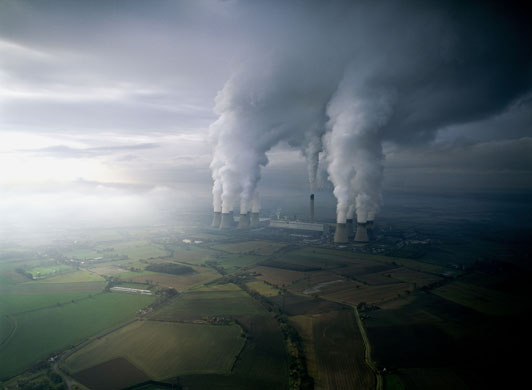
The discovery of fossil fuels as an energy source has greatly increased production processes. It has proven to be so effective that 85% of the energy in the U.S. is produced by burning fossil fuels. This increase in production also includes the production of food. However, the emissions given off by the combustion of fossil fuels to create this energy has also harmed the food industry, and will continue to do so unless we begin using alternative production methods. One of the effects of these emissions that is causing the most concern is global warming.


http://www.newscientist.com/data/images/ns/cms/dn11639/dn11639-2_808.jpg


The earth’s surface temperatures are currently expected to increase by 0.2 degrees celsius every ten years. This increase would create better growing conditions for food in northern regions, but at the same time could also make regions close to the equator too hot to grow certain types of food. The change in temperature would also provide a larger habitable area for insects that destroy crops. Another repercussion is an increased evaporation rate, thereby reducing the supply of water available for food growth. In addition, sea levels would rise as global warming is causing the ice caps to melt.


http://www-tc.pbs.org/wgbh/nova/megavolcano/images/shin-nasa-gfsc-meltwater-l.jpg


Low-altitude agricultural regions would eventually become completely submerged. This loss of growing area would cause the demand and the price of food to increase dramatically. Fossil fuel combustion is also resulting in an increase in ozone levels at the earth’s surface. Although it is a necessary component of the atmosphere, it is hazardous to both animals and vegetation at ground level. Ozone is formed when nitrogen oxides and volatile organic compounds (which are both emitted during fossil fuel combustion) react with each other. The resultant ozone is being absorbed by crops, and destroying them - in 1990, over $215 million in crops were destroyed in the U.K. In these ways, our use of fossil fuels and energy consumption is destroying the growth, production, and economy of a vital resource. For more information, check out these sources on energy consumption and how it affects the food industry: Agriculture, Food Production Daily, and Monitoring Energy Efficiency in the Food Industry.


Although greenhouse gas emissions resulting from the burning of fossil fuels is negatively affecting food production, the energy consumption of the food industry itself is also contributing to greenhouse gas emissions. The food industry uses about 10% of the the total energy consumed in the U.S., and the growth and production processes are extremely energy inefficient - it takes three calories of energy just to produce one calorie of food. Much of the energy used in food production isn’t actually put towards growing food, either - 40% is used to produce fertilizers, 23% is used to process and package the food, and another 32% comes from its refrigeration and cooking.


Diesel fuel is also consumed by farm machinery used for planting, tilling, and harvesting crops, as well as vehicles that transport food to finish being processed or to be sold. The large amount of energy being used so inefficiently is impacting the economy of the food industry. Right now, it is resulting in reduced incomes and losses of jobs as food production companies go out of business. This has a large impact on the economy, as 35% of the U.S. work force works in the food industry. Eventually, as the demand for food becomes greater, food prices will increase and agricultural exports will drop. In order to sustain the food industry and its economy, the industry must develop less expensive, more energy-efficient methods of food production. Check out these websites on energy usage in food production: Food Production Daily, and Sustainable Table.


There are many ways farmers can decrease both their energy consumption and expenses in food growth, production, and transportation, by practicing sustainable farming. One of the simplest ways to do this is to sell their products locally.


http://www.filaskyfarm.com/images/farm_stand.jpg


This simply means that less fuel is used to transport the food, therefore the farmer spends less money and uses less energy. Eliminating the process of tilling the soil can also save energy and money, as the farm equipment that would normally till the soil requires about 3.9 gallons of diesel fuel per acre of land. On an average farm of about 740 acres, the farmer would save 2886 galleons of fuel and almost $7 720. Refraining from tilling the soil also counteracts some of the effects of fossil fuel combustion. When plants absorb carbon, they draw it down into the soil and out of the air. By not tilling the soil, the carbon is able to stay in the ground. Farmers can also cut down on the large amount of energy used in the production of fertilizer by using manure, a natural fertilizer. If animals are allowed to graze in the fields, they feed themselves as well as spread manure. This greatly reduces the cost of fertilizer and feed for the animals, as well as the fuel needed to transport them to the farm. These simple practices allow farmers to save energy and reduce the impact of global warming on food production, as well as save money to sustain the economy of the food industry. Check out this information on sustainable farming: Sustainable Table.

- Stephanie Fleming


Works Cited

Buchdahl, Joe and Hare, Sue. "Agriculture." Encyclopedia of the Atmospheric Environment. 2000. http://www.ace.mmu.ac.uk/eae/Global_Warming/Older/Agriculture.html (accessd October 25, 2009).


Decision News Media. "Energy efficient food safety." Food Production Daily. April 27, 2004. http://www.foodproductiondaily.com/Processing/Energy-efficient-food-safety (accessd October 25, 2009).


Fletcher, Anthony. "Food production hit by increasing ozone levels." Food Production Daily. October 8, 2004. http://www.foodproductiondaily.com/Supply-Chain/Food-production-hit-by-increasing-ozone-levels (accessed October 25, 2009).


Ramirez, C. A. "Monitoring Energy Efficiency in the Food Sector." Utrect University. September 22, 2005. http://www.chem.uu.nl/nws/www/publica/Publicaties2005/E2005-66.pdf (accessed November 1, 2009).

Sanders, Rich. "Fossil fuel and energy use." Sustainable Table. 2003. http://www.sustainabletable.org/issues/energy/ (accessed October 25, 2009).